
With Donald Trump the appeal has to be to his business instincts in which his personal interests seem to play a significant role, says former foreign secretary Kanwal Sibal.
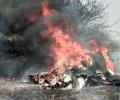
facilities at Bangalore one understands the financial year end frenzy at these establishments and the slipshod slippages in timeframes, quality of overhaul, servicing and quality control across the board, for aircraft and equipment alike,' says Group Captain Murli Menon (retd).

India on Monday did some plain-speaking with China over its blocking of the Indian bid to get JeM chief Masood Azhar banned by the UN and warned the global community of "serious consequences" if it continues to adopt "double standards" in dealing with terrorism.

'No one needs to lose sleep if a person with better operational credentials supersedes lesser endowed peers,' says Group Captain Murli Menon (retd).

This is the joint statement issued by the ministry of external affairs on the visit of US President Barack Obama to India.

'The devious minds across the border will test us to the hilt, but in the course of that will offer us opportunities for which we must be prepared,' says Lieutenant General Syed Ata Hasnain (retd), who commanded the Uri Brigade, the Baramulla Division and the Srinagar-based Chinar Corps.
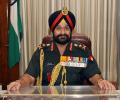
Army Chief Gen Bikram Singh to be appointed chairman of chiefs of staff committee in January, Lt Gen Anil Chait to head army, say sources
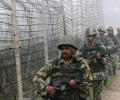
'For every act of terrorism on Indian territory for which there is credible evidence pointing to the Pakistan army and the ISI's involvement, carefully calibrated military strikes must be launched against the Pakistan army,' says Brigadier Gurmeet Kanwal (retd).

United States president-elect Donald Trump's tweet for strengthening and expansion of country's nuclear arsenal is indicating a major policy change as against the Obama Administration which had pushed for reduction and ultimately elimination of nuclear weapons.

According to convention, Lieutenant General Praveen Bakshi should be named as General Dalbir Singh Suhag's successor as army chief

'While economic ties are making incremental progress, it is in the security and strategic domains that the India-Japan synergy is more compelling,' says Dr Rajaram Panda.

An MoU on sharing hydrological information of the Brahmaputra River by China to India and another pact on amendment of the protocol on phytosanitary requirements for exporting rice from India to China to include non-Basmati rice were signed after the Modi-Xi talks in the eastern Chinese port city.

Terrorism and Afghanistan were the focus points of Prime Minister Narendra Modi's talks with Uzbek President Islam Karimov on his first visit to Central Asia.
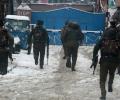
'We need to be in a perpetual state of aggression, and able to swiftly change the goal posts to keep Pakistan in a state of imbalance,' argues Sanjeev Nayyar.

Official talks were held between Modi and Seikh Tamim for multi-sectoral partnership and strengthening of Indo-Qatar ties following which the agreements and Memorandums of Understanding were signed on the second day of the Prime Minister's visit.

The Border Defence Cooperation Agreement with China needs closer scrutiny, says Rup Narayan Das.

'Obama's visit to Hiroshima must generate a fresh debate in the international community about how to reduce the salience of nuclear weapons in international politics and how to disarm the world from these monstrous weapons forever,' says Sanjeev Shrivastav..

'IAF is expanding at a rapid pace'

Being a pragmatist Modi is not likely to give preference to China over Japan. Both security and economic aspects are likely to shape Modi's decision in terms of engaging the two biggest economies of Asia, says Sana Hashmi.

Backloading the government's borrowing programme suggests the finance ministry's confidence in better revenue numbers, says A K Bhattacharya.

Tragic as it is, the submarine accident is more tactical in nature and it is the deeper strategic malaise across the board -- political, economic, security, judiciary, bureaucracy and even the media -- that has led to this dark mood of gloom and despondency, says Commodore (retd) C Uday Bhaskar.

While the Rafale deal seems to be the main order of business during French President Francois Hollande's visit, other aspects could help sweeten the deal, says Claude Arpi.

After weighing all the costs and benefits, the next administration is likely to reduce and restructure assistance to Pakistan but not to end it altogether, says Daniel S Markey.

20 years ago this day, May 11, 1998, India conducted its second nuclear test at Pokharan in Rajasthan. In a fascinating interview on Rediff.com, K Subrahmanyam revealed how Indian PMs reacted to nuclear ambitions.
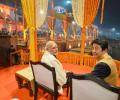
'Modi and Abe are working seriously for India-Japan bonhomie to grow stronger.' 'It is a win-win situation for both countries and the future look promising,' says Rajaram Panda, the Indian Council for Cultural Relations India Chair Visiting Professor at Reitaku University, Japan.

'Modi's investment in the relationship with Washington is the biggest deliverable of this visit. He means business and that's fantastic!'

Any settlement with Pakistan won't last unless it comes with big power guarantees, says Shekhar Gupta.

'Islamabad receives billions in aid from the US but continues to harbour terrorists,' he said.
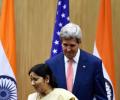
There was no breakthrough in US Secretary of State John F Kerry's India visit, but no breakdown either, says C Uday Bhaskar.

India and China decided to seek a fair and rational solution to their border dispute on Saturday as they focused on the proposed border defence cooperation agreement to avert incursions like the one witnessed in Leh region last month.
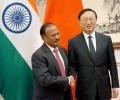
The decision was taken during the annual 19th round of boundary talks in Beijing between National Security Advisor Ajit Doval and his Chinese counterpart Yang Jiechi.

'For its part, Pakistan often gives safe haven to agents of chaos, violence, and terror.'

'The government, supposedly manned by wise and experienced officers, was all at sea, unable to act cohesively, and with restraint. Each agency was out to score brownie points.'
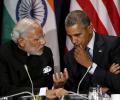
'Big countries do not agree on every set of issues.' 'Look, one of the differences in the relationship is that when we do not agree, we are sitting down and talking to each other.'

Moving ahead with their new mantra -- Chalein Saath Saath: Forward Together We Go -- Prime Minister Narendra Modi and United States President Barack Obama on Tuesday vowed to deepen cooperation in every sector for the benefit of global stability and people's livelihoods over the next ten years.
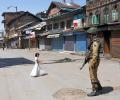
We must repeal AFSPA to begin to heal Kashmir, and to enhance India's moral stature and that of the army, says Ajai Shukla

'It was almost as though there was widespread relief that the defence bureaucracy, and the minister, could find someone willing to shoulder the blame for everything that had gone wrong with the services under Antony's charge -- the poor preparedness of the forces, slow acquisitions caused by indecision, cancellation of contracts and whimsical blacklisting of defence contractors over the tiniest suspicion that they may have paid speed money or kickbacks.'
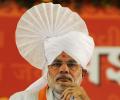
The second and final part of former cabinet secretary Naresh Chandra's interview to Sheela Bhatt.

'We don't know what the reasons were that we gave back the Haji Pir Pass which was strategically very important. Today the entire infiltration into Kashmir takes place from that area. If we had retained that post that we had captured, things could have been different.' 'A lesson we need to learn is if you start losing the gains of war at the negotiating table, they become a disincentive for future wars,' says Lieutenant General D B Shekatkar (retd), reviewing the lessons from the 1965 War.

India has built two top-secret facilities in Karnataka to enrich uranium in pursuit of its hydrogen bomb dream.
